Emergency boiler repair in Marblehead, MA
No heat on a cold night is a household emergency, and our line is answered 24/7. Check that the thermostat is calling for heat, that the boiler has power and fuel and that the pressure gauge reads in its normal range, then call. Same-day visits are offered when a slot is available.
Boiler repair means finding why the system is not making or moving heat and replacing the failed part. Common faults are an ignition problem, a failed circulator pump, low or high pressure, a stuck zone valve, an air-locked radiator or a leaking fitting.
Emergency: no heat in cold weather
A house that loses heat in a cold snap risks frozen pipes within hours. The first goal is to keep the building above freezing while the boiler is fixed.
Our emergency plumbers answer 24/7 and offer same-day service when available. The steps below protect the pipes until they arrive.
- Check the basicsThermostat, boiler switch, fuel and the reset button.
- Protect the pipesOpen cabinet doors on exterior walls and let a tap drip.
- Add safe heatUse a safe space heater away from anything flammable.
- Call the lineSay what the boiler is doing and the pressure reading.
Heating older Marblehead homes
Marblehead has a large stock of homes built long before modern heating, with systems that have been added to and adapted over decades. Radiators that heat unevenly, zones that were added later and boilers in cramped basements are all familiar.
Winter on the coast brings wind and damp, and a house that loses heat cools fast. The plumber also checks the pipes in exterior walls, because a heat failure is how many freeze breaks start.
Boiler and gas work in Massachusetts is held to state standards, and the Board of State Examiners of Plumbers and Gas Fitters licenses the trades involved. Ask who holds the licence for the work on your boiler, and follow the guidelines in the manufacturer's manual for pressure and service intervals.
No heat: a short checklist
Start with the thermostat, the switch on the boiler and the fuel supply. An oil boiler needs oil in the tank and a reset button that has not tripped. A gas boiler needs the gas valve open and the pilot or igniter working.
If the boiler runs but the house stays cold, the problem is often a circulator pump that failed, a zone valve that did not open or air trapped in the loop. Those are plumber jobs, and we diagnose them on the first visit.
Pressure faults and leaks
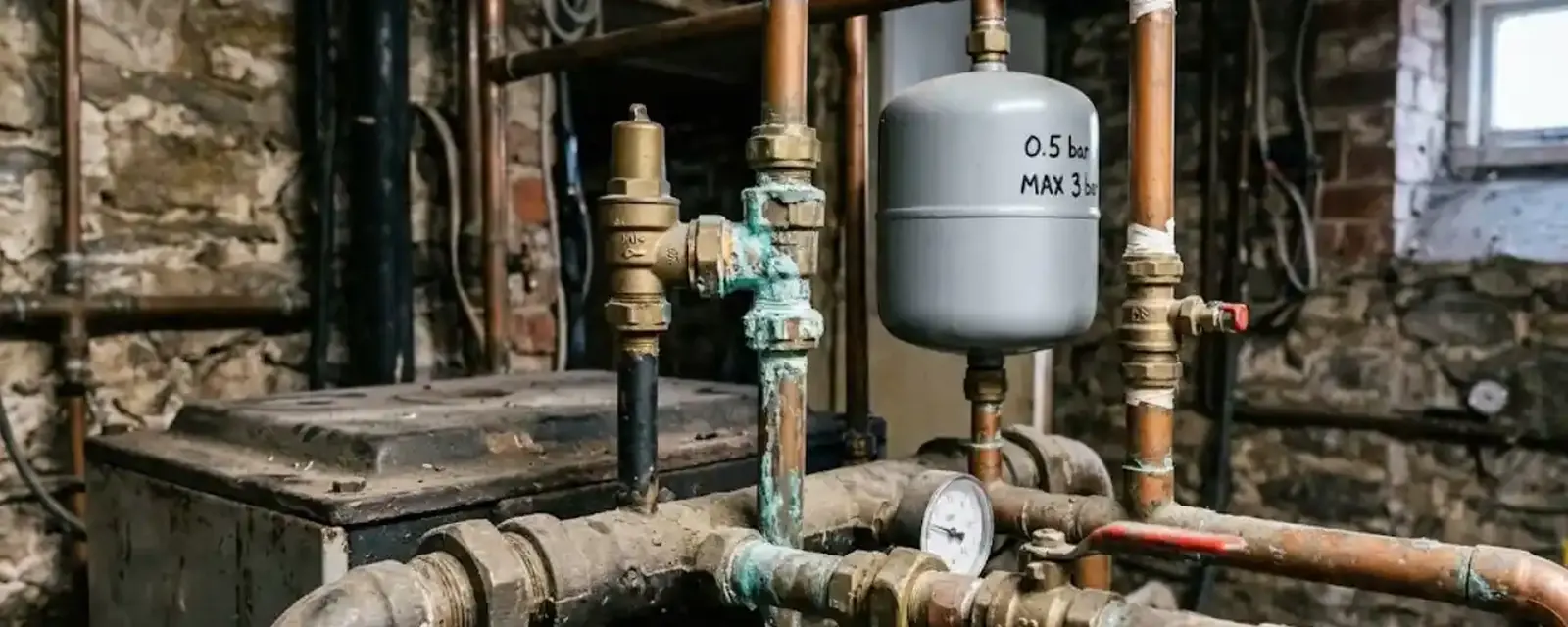
A hot water boiler holds a set pressure, usually in the low teens when cold. Pressure that keeps falling means a leak or a failed expansion tank. Pressure that climbs and discharges the relief valve points to the same tank or to an overfilling valve.
A boiler that needs water added again and again is leaking somewhere, even if you cannot see it. We look at the fittings, the relief valve and the pipes along the way, and we tell you if the boiler itself is leaking.
No heat right now?
Call the 24/7 line and a plumber can book the visit.
Noises and what they mean
Banging or kettling
Scale or low water flow overheats the water in the heat exchanger.
Gurgling in radiators
Air in the loop needs bleeding or a purge.
Clicking at the valve
A zone valve motor may be failing.
Loud pump hum
A worn circulator can seize.
Never ignore a smell of gas or a sooty flue. Leave the building and call the gas utility or 911 first. A boiler that vents badly can release carbon monoxide, and a working detector near the boiler room is essential.
Steam, hot water and older systems
Steam boilers have a sight glass, a low-water cutoff and radiator vents that wear out. Hot water systems use circulators, zone valves and expansion tanks. Older systems may combine both ideas with decades of patches.
Marblehead has many older houses, and old boilers are common. We explain what we find, and when a repair is likely to be followed by another one, we say so.
Repair or replace
A boiler that is under about 15 years old and has a single failed part is usually worth repairing. An older unit with a cracked heat exchanger or recurring faults is a replacement case. The plumber lays out both so you decide with the numbers in front of you.
Boiler symptoms and likely causes
Use this table to match the symptom with the first thing a plumber checks.
| Symptom | Likely cause | First check |
|---|---|---|
| No heat at all | Ignition, fuel or power | Thermostat, switch, fuel and reset |
| Boiler on, house cold | Circulator or zone valve | Pump motor and valve actuator |
| Pressure keeps dropping | Leak or expansion tank | Fittings and tank charge |
| Banging noises | Scale or low flow | Water flow and heat exchanger |
What affects the price of boiler repair
The price depends on the part and the system. We confirm it before work starts.
Boiler repair is a maintenance cost and is not usually covered by homeowners insurance. A burst pipe caused by a heat failure may be a different matter, so ask your insurer.
Boiler repair questions
Yes. The line is answered 24/7 and same-day visits are offered when available.
A slow leak or a failed expansion tank is the usual reason. A plumber checks the fittings, the relief valve and the tank.
Most manufacturers recommend yearly service before the heating season.
For hot water systems, many homeowners do. If you are not sure, ask the plumber to show you.
The plumber handles boiler plumbing, circulators, valves and pressure faults. For burner and oil-fired work, the plumber advises whether a separate heating specialist is needed.
Leave the building and call the gas utility or 911. Do not operate switches or call from inside.
Related help
A boiler that feeds a water heater coil may also affect hot water, see water heater repair. A leak in the loop may need leak detection, and a burst pipe from freezing is covered under burst pipe repair. We serve Lynn and Peabody too.