What you are paying for
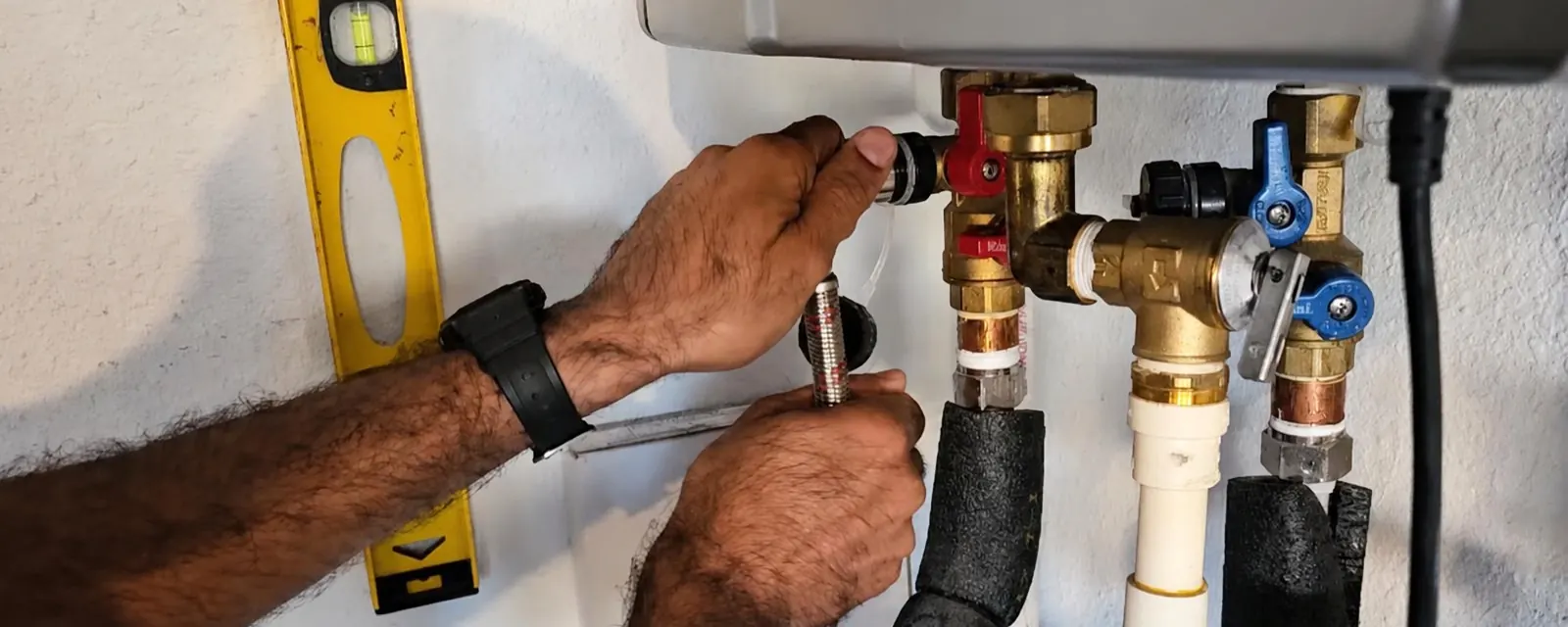
A whole-house tankless water heater heats water on demand, so it does not store a tank. The price includes the unit, the installation labor, any changes to gas or electrical supply, venting, a drain for condensate on high-efficiency models, valves for flushing and permits.
Upfront cost is higher than a standard tank. The savings come from longer life, a smaller footprint and no standby heat loss, and they depend on how you use hot water.
Gas or electric changes the whole job
Gas tankless units often need a larger gas line than the tank they replace, and the meter has to supply enough fuel at full firing. Electric units draw a large current and may require a panel upgrade. Those changes are not part of the heater's price.
A plumber measures the existing gas line, meter and panel before quoting.
Venting and condensate
Condensing units vent through plastic pipe and produce acidic condensate that must drain to a safe place. Venting runs through a wall or roof, and the route affects labor. In cold climates a condensate line in an unheated space can freeze, so it needs protection.
Replacing an old atmospheric-vented tank with a sealed-combustion tankless often changes the entire vent setup.
Local note: permits and codes in Marblehead
Plumbing work in Massachusetts follows the Uniform State Plumbing Code, 248 CMR 10.00, and gas work follows the state's fuel gas rules. Marblehead's Building Department lists permits for plumbing and gas work and states that they are issued to licensed professionals, with a penalty fee of three times the normal amount for starting without one.
Houses on the coast also see cold winters and wind. A tankless unit in an unheated garage or crawlspace needs freeze protection, and the plumber should discuss it before ordering.
Pricing a tankless swap?
Call to talk through your house.
Sizing sets the unit
Flow rate
How many fixtures run at once.
Temperature rise
How far incoming water must be heated.
Fuel type
Gas units deliver more than most electric ones.
Household size
More people means more peak demand.
Labor, permits and the finish work
Labor depends on access, the distance from the old heater and the amount of rework. Permit fees and inspection scheduling are part of the project. Ask if the quote includes valves for flushing, which make yearly descaling easy.
Ask what is excluded. Drywall repair, painting and electrical work by another trade are common exclusions.
Is it worth it?
For a large household, a limited space or a house that uses a lot of hot water, often yes. For a one- or two-person household with a working tank, a standard replacement may be the better value. See tankless water heater service and water heater installation for the options.
A plumber lays out both side by side so you decide with the numbers in front of you.
Ways to keep the cost reasonable
Choose a unit sized to your real peak use, not the largest available. Place it close to the old heater to keep piping short, and reuse an existing vent path if the new unit allows it. A flexible schedule helps the crew too.
Ask about manufacturer or utility rebates for efficient models, and read the terms. Eligibility often depends on the model and the installation.
Hidden costs to ask about
Ask whether the quote includes isolation valves for flushing, a new gas shutoff, a condensate neutralizer, a surge protector, drywall repair and disposal of the old tank. Each can add to the final bill if it is left out.
A quote that lists every item in writing is easier to compare than a single lump sum.
Comparing a tankless quote with a tank quote
Ask for both quotes in the same format, with the unit, the labor, the permit and the extras listed. A tank swap in the same location often has few extras. A tankless conversion often has several.
Then ask about operating costs and expected life. A tankless heater that lasts about twenty years may cost less per year of service than two tanks, but only if you flush it and it fits your use. A plumber who explains both sides is worth the call.
Finally, ask how long the installer will be on site and what the house needs from you, such as clear access, power off to the old heater and a plan for the water shutoff. A short, clear plan means fewer surprises on the invoice.
Where the money goes
The unit is one line among several.
| Item | What drives it |
|---|---|
| Heater | Capacity and brand |
| Gas or electric supply | Existing line and panel |
| Venting | Route and material |
| Labor | Access and rework |
| Permits | Local fees and inspection |
Tankless cost questions
The heater costs more and the gas, electrical and venting changes add labor.
It can, depending on your use. Savings come from no standby heat loss.
Ask the Building Department. It lists permits for plumbing and gas, issued to licensed professionals.
Sometimes. The plumber checks the size and the meter first.
Yes. Flushing to remove scale is important, especially for warranty.
Not always. It depends on your use, fuel prices and how well the unit is maintained.
A conversion often takes most of a day, sometimes longer if the gas line or venting changes.