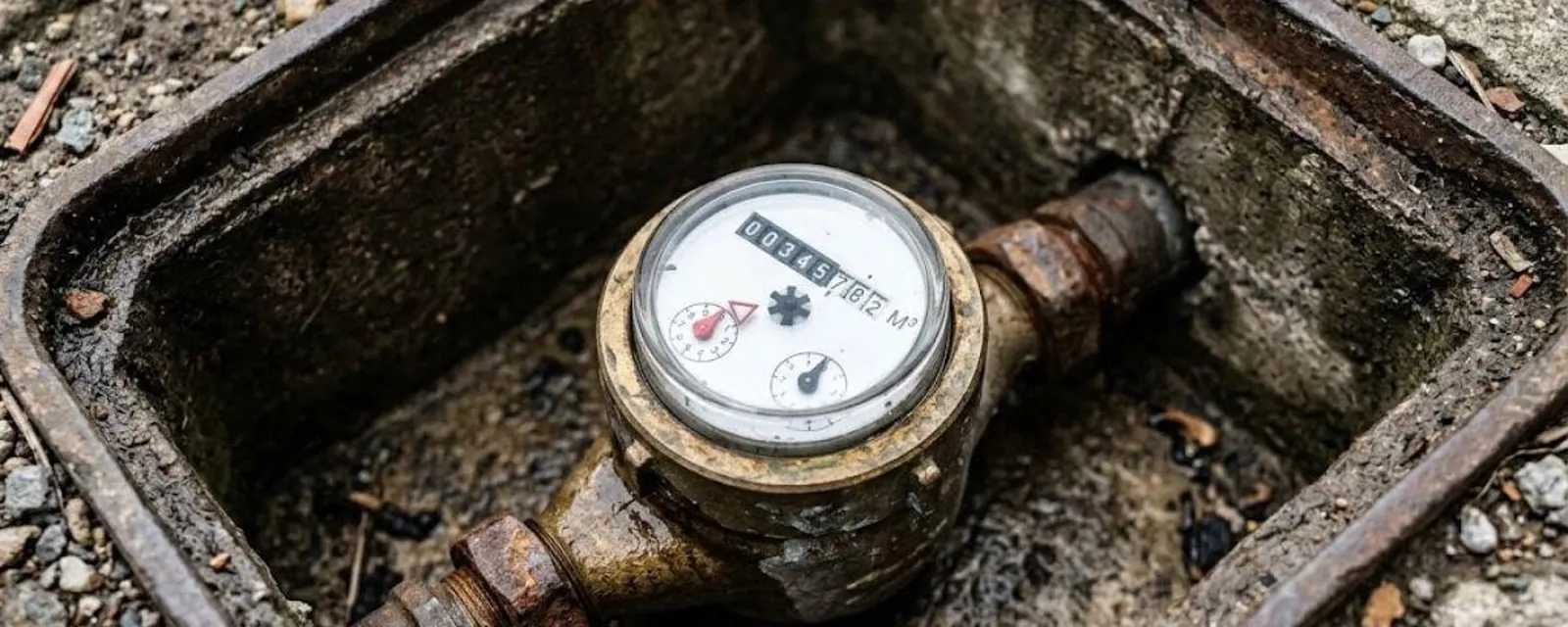
Why the meter is the first thing to check
Your water meter counts every gallon that passes into the house. If the meter keeps counting when no fixture is running, the water is going somewhere, and that somewhere is a leak. The test costs nothing and takes about as long as a cup of coffee.
Many hidden leaks are small. A toilet that refills silently or a joint that weeps behind a wall can add up on the bill long before anything shows on the ceiling. The meter reveals them.
Step by step
Turn off every faucet, the dishwasher, the washing machine and the ice maker. Make sure no one flushes a toilet. Find the meter, usually in the basement near where the water line enters, and open the lid if there is one.
Look for the leak indicator, a small triangle, star or dial that spins with even tiny flow. If it moves with everything off, you have a leak. If there is no indicator, write down the reading, wait an hour without using water and read it again.
The toilet dye test
Toilets are the most common silent leak. Drop a few drops of food coloring into the tank and do not flush. After fifteen to twenty minutes, if any color shows in the bowl, the flapper is leaking and the toilet is refilling constantly.
A new flapper is a cheap repair. See toilet repair for what else to check on a running toilet.
Local note: who to call in Marblehead
Marblehead buys all of its water from the MWRA, and the town's Water and Sewer Department handles the local system and the meters. If a leak sits on the town's side of the meter, it is the department's to repair, and you can confirm that by describing what you found.
The department can also confirm what your service pipe is made of. According to the town's water letter, Marblehead has no known lead service lines, but a few homes have galvanized iron services that may include a short lead gooseneck. Ask about yours.
According to the manufacturer's guidelines for most residential meters, the small leak indicator moves with even tiny flow, so any movement with all fixtures off is worth acting on.
Meter still moving?
Call the 24/7 line and a plumber can find the leak.
If the test points to a leak
Indicator moves, toilets clear
Check the water heater relief valve and any outdoor spigot.
Indicator moves, no visible water
The leak is hidden in a wall, floor or buried line.
Pressure fell lately
A buried supply line may be leaking.
Warm patch on the floor
A hot water line under a slab may be failing.
Testing the line from the street
Close the main shutoff valve inside the house and watch the meter. If it still moves with the main closed, the leak is between the meter and the shutoff, which is the buried section. That is the territory of water service line repair.
If the meter stops when the main closes, the leak is inside the house, and leak detection can find it with pressure tests and thermal imaging.
What to write down
- The meter reading and the time.
- Whether the leak indicator moved.
- Photos of any stain or damp area.
- The result of the toilet dye test.
Common mistakes that spoil the test
A drip from an ice maker, a softener that recharges overnight or a sprinkler zone that kicks on will all move the meter and fool the test. Turn those off first, or run the test when they cannot run.
Another mistake is reading too soon. Small leaks need time to show. If the first check shows nothing, wait longer and read again before you decide there is no leak.
What happens after a positive test
Write down what you found and call a plumber. Leak detection narrows the source with pressure tests on each branch of the plumbing, listening gear for buried lines and thermal imaging for hot water leaks. Most of the work happens without opening a wall.
Repair follows the finding. A flapper is a small job, a pinhole in a wall pipe is a bigger one and a buried line may need excavation or a new run.
Documenting the test for a plumber
Take a photo of the meter before and after the wait, with the time visible. Note which fixtures were off and whether you saw the indicator move. A plumber who starts with that record can go straight to the likely source.
Water meter leak test questions
At least an hour with no water use gives a clear difference. Overnight is even better.
Take a reading and photograph it, wait an hour and compare. Any change with everything off is a leak.
Yes. A flapper that leaks can pass many gallons a day without any sound.
A wet spot or sinking ground over the service line is a sign. Close the main inside and watch the meter to confirm.
A plumber with acoustic and thermal equipment. Call before opening any floor.
Yes. The same steps apply, and the crew serves Lynn and Swampscott too.
Water damage and mold grow with time. Fix it soon and shut off the supply to the affected fixture if you cannot.
Compare readings over several days and check for irrigation, a pool fill or seasonal use before calling.