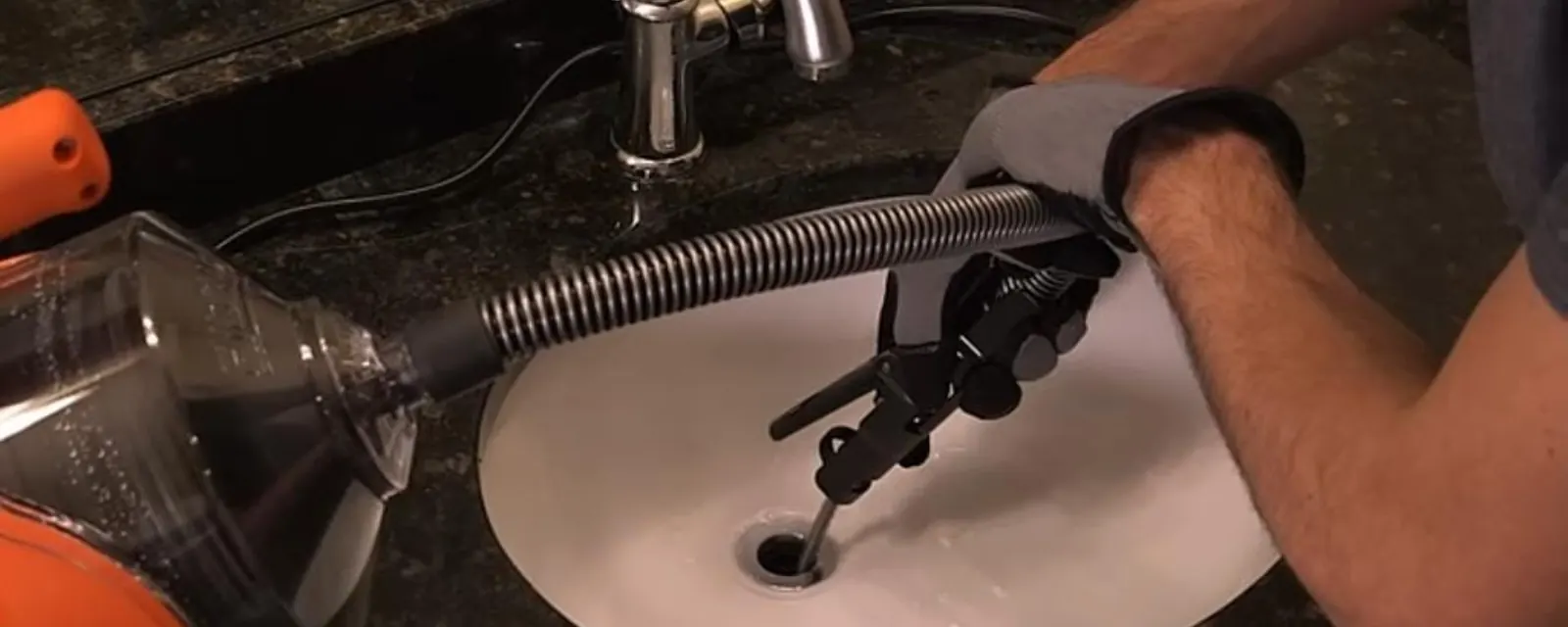
Why a clear trap does not mean a clear drain
The trap under the sink is the easiest place to clean, so people clean it first. If the sink still drains slowly afterward, the problem sits past the trap. The pipe may be coated with grease, the vent may be blocked or the line may be partly blocked downstream.
Look at the pattern. Does the sink drain slowly all the time or only when the dishwasher runs? Do other fixtures gurgle? The answers narrow the cause quickly.
Grease film on the pipe wall
Kitchen grease cools in the pipe and clings to the wall, trapping food scraps. Over months the bore narrows, and water passes through a smaller opening. The sink does not clog completely, so it seems fine until the film gets thick.
A cable with a cutting head scrapes the wall, while hot water alone only moves the grease further down. Drain cleaning covers the methods.
Vent problems
Drains need air behind the water to flow freely. A blocked vent pipe on the roof, caused by leaves, a bird nest or ice, creates a vacuum and slows the drain. A sign is gurgling at other fixtures when the sink empties.
A plumber can check the vent from the roof and clear it. Do not climb a roof in winter conditions.
Local note: Marblehead's sewer and what reaches it
Marblehead's Water and Sewer Department maintains more than one hundred miles of sewer main, serving about 7,800 buildings, and pumps the sewage to the South Essex Sewerage District plant in Salem. According to the town's by-laws, the sanitary sewer should carry only indoor drain flows, so the sink is meant for dishwater, not grease and solids.
If several homes on your street have slow drains at once, the shared main may be the cause. The department's emergency line is the place to report it, and a plumber can tell you whether the problem is on your side.
Sink still slow?
Call the 24/7 line and a plumber can trace the cause.
The disposal and the dishwasher
A disposal that is partly jammed or a dishwasher drain hose that kinks can slow the sink. Check that the dishwasher knockout plug was removed and that the hose rises to a high loop before it reaches the disposal.
If the disposal hums or leaks, see garbage disposal repair.
A partial blockage in the branch or main
Other drains slow too
The main or branch line is narrowing.
Gurgling from a tub or toilet
Air is being pushed back through the traps.
Slow only after laundry
The line is near capacity.
Smell near a floor drain
Waste is sitting in the line.
What not to do
- Do not pour chemical drain cleaner into a slow sink.
- Do not run hot grease down the drain.
- Do not force a cable into a line you cannot see.
- Do not ignore a slow drain for months.
Simple habits that keep the kitchen drain clear
Wipe greasy pans with a paper towel before washing. Pour cooled cooking fat into a can and put it in the trash. Run hot water for a few seconds after dishes, and scrape plates before they go in the sink or the dishwasher.
A monthly flush with very hot water helps a little, but it does not replace removing grease before it enters the drain.
What a plumber does for a persistent slow drain
The plumber starts with the trap and the disposal, then runs a cable with a cutting head through the branch to scrape the wall. A camera shows what remains. If the line is coated, hydro jetting washes the whole bore.
If the vent is the cause, the plumber clears it. If the main is partly blocked, the work moves to sewer line cleaning.
Telling a trap problem from a line problem
Put a bucket under the trap and run water. If the water leaves the trap quickly and then backs up beyond it, the trouble is further down. If the trap itself is full of sludge, cleaning it often solves the problem.
Try one more test. Run the dishwasher and watch the sink. If the sink fills when the dishwasher drains, the shared line is restricted, and cleaning the line is the next step.
If you rent or live in a multi-unit building, tell the owner when a kitchen sink stays slow. A shared stack can be restricted by grease from several units, and clearing it is the building's job, not yours.
Slow kitchen sink questions
The pipe wall may be coated with grease, the vent may be blocked or the line may be partly blocked further down.
Yes. A blocked vent creates a vacuum and slows the flow.
They can help with light buildup but do not clear a real blockage or a blocked vent.
The town handles the public main. If your cleanout is clear and the street main is full, call the Water and Sewer Department.
When sewage is rising or several fixtures are affected. See sewer line cleaning.
It can freshen a drain but does not remove grease coating or a partial blockage.
Yes, if its drain hose kinks or the disposal port is blocked.