Start at the top of the drain
Most bathroom sinks have a pop-up stopper with a lever and a pivot rod behind the faucet. Hair and soap scum collect on the stopper and just below it, long before the trap. Cleaning that area clears the majority of slow bathroom sinks.
Work from the top downward. Each step is a little more effort than the last, and you stop when the sink runs freely.
Pull the stopper and clean it
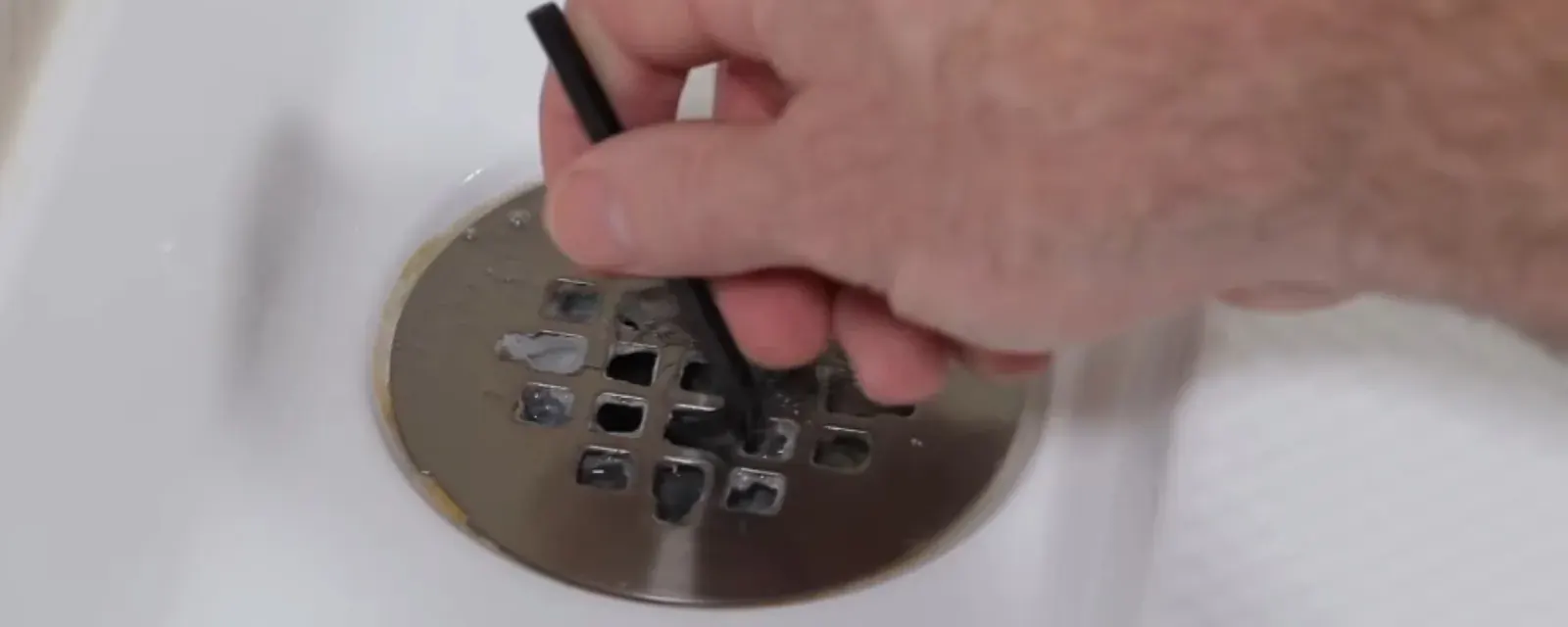
Look under the sink for the pivot rod. Unscrew or unclip it from the strap, then lift the stopper out. Wipe the hair and gunk from the stopper and from the drain opening, and look down the pipe with a flashlight.
A plastic drain-cleaning strip, sold at hardware stores, pulls out hair that your fingers cannot reach. Put the stopper back and test the flow.
Clean the P-trap
Put a bucket under the trap and unscrew the slip nuts by hand. Pour out the contents, clean the inside and check the pipe leading into the wall. Reassemble with the washers in place and run water to check for drips.
Hand-tighten, then give a small turn with pliers. Overtightening cracks a plastic nut.
Local note: who to call about the street main in Marblehead
Marblehead runs a flow metering and smoke testing program in its sewer system, followed by rehabilitation work in defined work areas. If neighbors on your street also report slow drains, ask the Water and Sewer Department whether work or a problem is under way on your main.
The department maintains more than one hundred miles of sewer main and an emergency line for urgent issues. A plumber can tell you whether the cause is in your branch or at the street.
Pop-up assemblies follow the maker's guidelines for pivot rod position, so check the instructions if the stopper does not seat.
Sink still slow?
Call the 24/7 line and a plumber can trace it.
Overflow channel and vent
The overflow hole near the top of the basin connects to the drain through a channel that can collect soap scum and smell. A bottle brush and warm water help. A blocked vent causes the sink to drain slowly with a gurgle, and a plumber should check it.
If the tub or shower in the same bathroom is also slow, the branch drain is the suspect.
When it is the branch or main line
Tub and toilet slow too
The shared branch is narrowing.
Gurgling at other fixtures
Air is being pushed back.
Smell from drains
Waste is sitting in the line.
Back-up after laundry
The main is near capacity.
Chemical cleaners
Chemical openers rarely clear hair and can sit in the pipe, where they injure whoever opens the trap next. They also attack older pipes and seals. Mechanical clearing is safer and works better. If you already used one, tell the plumber. See drain cleaning for the usual approach.
Preventing the slow drain from returning
Fit a fine hair catcher over the drain or stopper and empty it weekly. Rinse toothpaste and shaving residue away with a short blast of hot water. Pull and clean the pop-up stopper every few months.
A bottle brush used on the overflow channel each season prevents the musty smell that comes from soap scum collecting in a hidden space.
When it is time to call a plumber
If cleaning the stopper and trap does not help, if several fixtures drain slowly or if the sink gurgles, the cause is in the branch, the vent or the main. A plumber has the cable and the camera to find it and does not need to open the wall.
Water that backs up in the sink when you run the tub is a clear sign of a shared blockage. See drain cleaning for what happens next.
Tools worth keeping under the sink
A small bucket, a pair of slip-joint pliers, a flashlight, a flexible drain strip and a bottle brush handle nearly every slow bathroom sink. Together they cost little, and they save a service call for the common causes.
Skip the cheap wire coat hanger. It scratches the pipe and pushes hair deeper. A plastic strip with barbs pulls hair out instead of pushing it ahead of itself.
If you rent, check your lease before you disassemble plumbing. Many landlords prefer that a plumber handle anything beyond the stopper.
For a sink that drains slowly right after you clean it, check the pivot rod adjustment. If the stopper lifts only a little, water squeezes past a narrow gap. Loosen the clevis screw, raise the rod and tighten it so the stopper opens fully.
Slow bathroom sink questions
Hair and soap on the stopper and just below it cause most cases.
Disconnect the pivot rod under the sink, then lift the stopper out.
Only if other fixtures also slow or gurgle. Then the branch or main line is involved.
Yes. A blocked vent slows the flow and can make the drain gurgle.
Call the Water and Sewer Department if several neighbors are affected. Otherwise a plumber can check your side.
Check the stopper every few months and the trap once a year.
Yes. If the stopper does not lift fully, water has a smaller opening to pass through.