Start with usage, not dollars
A water and sewer bill is made of a usage figure and a rate. If the usage number rose, you used or lost more water. If the usage stayed the same and the total rose, the rate went up, and a plumber cannot help with that.
Pull out last year's bill for the same period and compare the usage figure, not the dollar amount. Seasonal swings are normal, so compare like with like.
Compare the right numbers
Look at the meter readings on the bill and whether the bill says actual or estimated. An estimated reading can be corrected on the next actual one and make the bill jump. Check whether the billing period was longer than usual.
If usage truly rose with no change in the household, move to the fixture checks below.
The usual household causes
Running toilet
A leaky flapper can waste many gallons a day.
Dripping fixtures
A drip each second adds up across a quarter.
Irrigation or outdoor use
A stuck valve or a hose left running.
Water heater relief valve
A discharge pipe that drips points to pressure or a failing tank.
Local note: how Marblehead bills water and sewer
Marblehead's Water and Sewer Department bills water and sewer for the town, and the town sets rates each fiscal year. A rate change can raise a bill even when your usage stays flat, so compare the usage figure before you suspect a leak.
The town buys all of its water from the MWRA, so the wholesale supply sits behind the rate you pay. If you think a meter is misreading, ask the department about testing. We do not state billing rules from memory, so ask the department what adjustments, if any, it offers after a repaired leak.
Ask the department for its guidelines on meter testing and on any adjustment it allows, because those policies are the town's to set and not a plumber's.
Bill still high after the checks?
Call the 24/7 line for leak detection.
Run the meter test
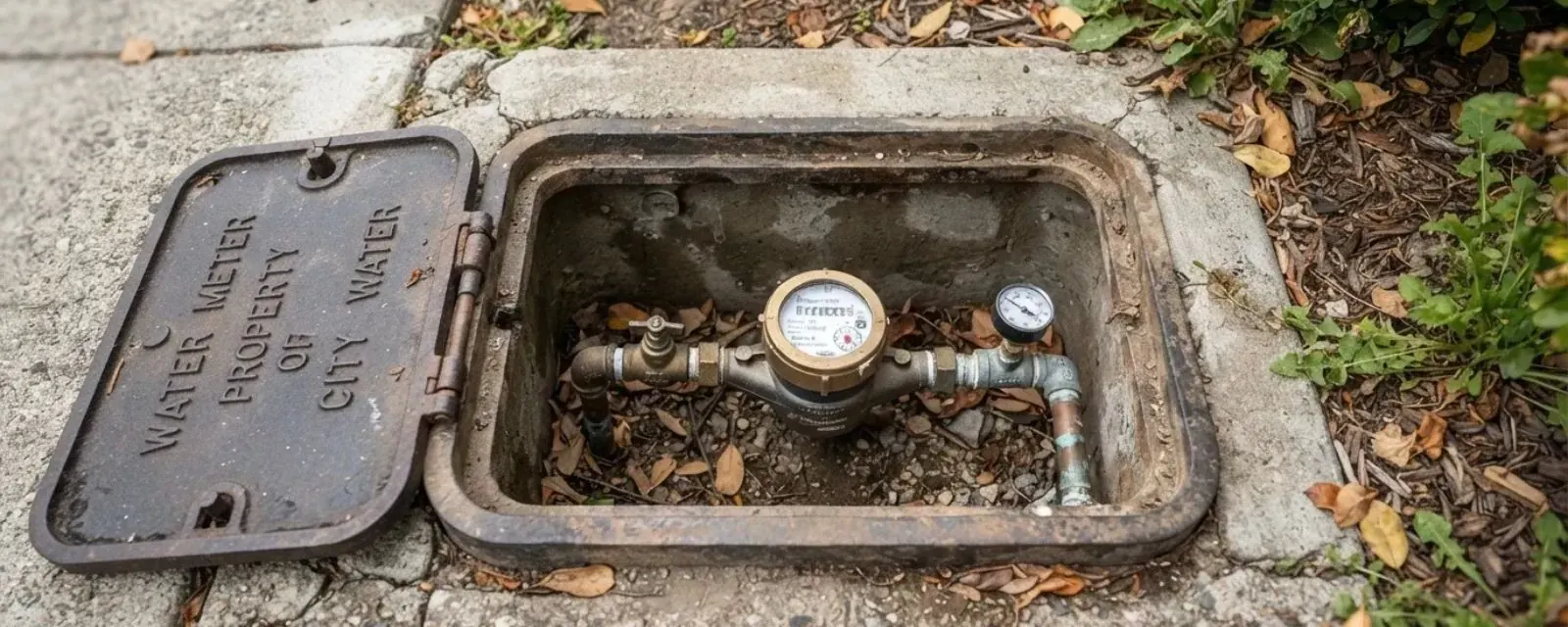
Turn off everything and watch the meter or the leak indicator. If it moves, there is a leak. Our guide to the leak detection process explains what a plumber does next, and the test above can be done in minutes at home.
If the meter stops when the house main is closed, the leak is inside. If it keeps moving, the buried section between meter and house is the suspect.
Hidden leaks that show up late
A pinhole in a copper line, a weeping joint behind a wall or a failed pipe under a slab can leak for months. Warning signs include a musty smell, warm floors, a hissing sound, new stains and falling pressure. A hot water leak also raises the gas or electric bill.
A burst or split line is a different scale of problem. See burst pipe repair if water is visible.
Documentation for the department and your insurer
- Meter readings with dates.
- The plumber's written finding.
- Receipts for repairs.
- Photos of any damage.
Seasonal and household reasons the bill rises
Guests, a new baby, a filled pool, watering a new lawn and a long run of hot weather all raise usage honestly. So does a washing machine upgrade that fills more often than the old one, or a fixture left running in a rental unit.
Write down any changes in the household and compare them with the dates on the bill. If the dates line up, there may be no leak at all.
Which leaks hide in plain sight
Outdoor spigots that drip behind bushes, a hose left connected to a leaking bib and a sprinkler head sunk in the lawn can run unnoticed. Walk the property after dark with a flashlight and listen for water sounds.
Indoors, check under every sink, behind the toilet and around the water heater and washing machine. A wet cabinet floor is a clear signal.
When to call a plumber about a bill
Call when the meter test shows movement with everything off, when a bill is double the usual with no change in habits or when you find damp spots, stains or sounds of water in the walls. Early detection limits both the water waste and the damage.
A plumber can also check your water pressure, since high pressure raises the chance of leaks and can make fixtures run harder.
High water bill questions
A leak, a running toilet or a stuck valve can run with no one home. The meter test shows whether water is moving.
It can, though leaks are more common. Ask the Marblehead Water and Sewer Department about meter testing.
Policies vary. Sudden damage may be covered and slow leaks often are not. Document everything.
It depends on access and method. We confirm the price before work starts.
Yes, a stuck zone valve or a broken head can run for days. Turn the system off and check the meter.
Yes. A leak that started late in a billing period shows up partly, then fully on the next bill.
Run the meter test. If the meter moves with the main closed, the leak is outside, so call a plumber and the department.